
Mountain living has a way of humbling every material decision, and flooring is where it shows fastest. A board that looks perfect in a showroom can cup, warp or grow mold within a single wet season once it meets sub-freezing nights, humid thaws and a foundation that sits closer to a water table than most builders would like. This guide breaks down exactly which flooring materials tolerate cold-damp mountain conditions, why they work, and how to install them so they last decades instead of seasons.
01Why Mountain Climates Are Uniquely Hard on Floors
Cold and damp rarely arrive separately at altitude — they arrive together, and they arrive in cycles. A mountain home can see overnight temperatures drop well below freezing while daytime snowmelt sends moisture straight into the ground around the foundation. That freeze-thaw cycle is what makes mountain flooring decisions fundamentally different from flooring decisions in a dry desert climate or a stable coastal one.
Three conditions compound the problem. First, ground moisture is nearly constant in many mountain regions, fed by snowmelt, spring rain, and slower evaporation rates in shaded valleys. Second, indoor-outdoor temperature swings are extreme, and materials expand and contract more aggressively than they would in a milder climate. Third, many mountain homes are built on slab-on-grade or crawlspace foundations that trap humidity underneath the living space, quietly feeding moisture upward into the flooring for months at a time.
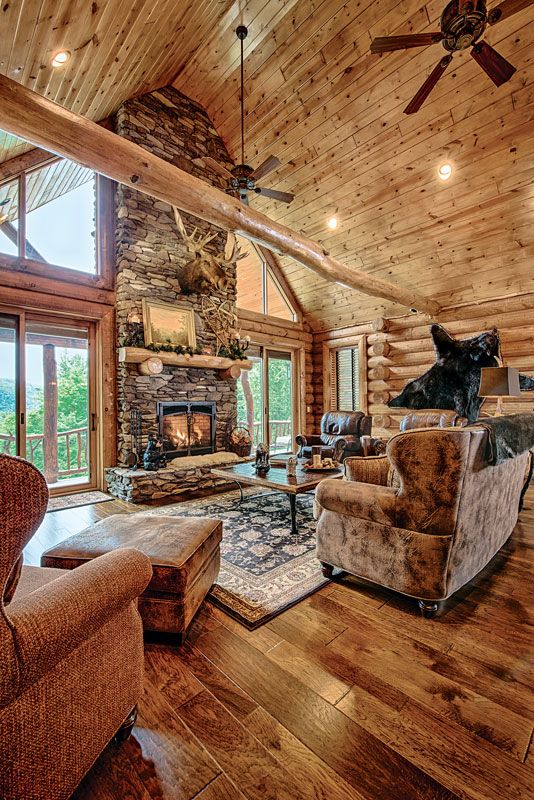
The result is a flooring failure pattern specific to alpine and subalpine construction: cupped hardwood planks, delaminating laminate, cracked grout lines, and — in the worst cases — mold colonies growing silently beneath flooring that looked fine from above. Choosing the right material isn't a style decision here; it's a structural one.
Before choosing a floor, test your subfloor's relative humidity with a moisture meter over several days. Readings above 12% in wood subfloors, or a concrete slab that hasn't cured for at least 60 days, both signal that moisture-sensitive materials like solid hardwood or laminate are a poor match until the moisture issue is addressed.
02What to Evaluate Before You Choose a Material
Every flooring decision for a cold, damp mountain property should be filtered through five practical questions rather than aesthetics alone.
Moisture tolerance
Can the material sit above a damp subfloor without swelling, cupping, or hosting mold? This matters more in mountain homes than almost anywhere else, since basements and crawlspaces rarely dry out completely between seasons.
Thermal behavior
Does the floor feel warm underfoot, and does it work well with radiant heating — a near-standard feature in serious mountain builds? Some materials (stone, tile) are naturally cold to the touch unless paired with in-floor heat; others (cork, engineered wood) retain warmth on their own.
Dimensional stability
How much does the material expand and contract across a 40–60°F daily swing? Solid hardwood moves the most; engineered wood, vinyl and tile move the least.
Slip resistance
Mudroom entries, ski boots and wet paws mean traction matters as much as water resistance. Textured tile, matte-finish luxury vinyl and sealed stone all outperform glossy, polished surfaces here.
Long-term maintenance load
A remote mountain property may not get a contractor visit every season. Materials that resist damage quietly — rather than requiring constant refinishing — tend to be the better long-term investment.
03Engineered Hardwood — The Balanced Choice
Engineered hardwood is frequently the best compromise for main living areas in a mountain home. Unlike solid hardwood, it's built from cross-layered plywood or high-density fiberboard topped with a real wood veneer, which drastically reduces the expansion and contraction that ruins solid wood in humid, temperature-variable environments.
It handles moderate humidity fluctuation far better than solid wood, works well over radiant heating systems when the manufacturer confirms compatibility, and still delivers the warmth and resale appeal of genuine timber. The trade-off is that engineered hardwood is not waterproof — standing water in an entryway or a slow plumbing leak can still cause damage over time, so it belongs in living rooms and bedrooms rather than mudrooms or bathrooms.

04Luxury Vinyl Plank — The Workhorse for Damp Zones
Luxury vinyl plank, commonly shortened to LVP, has become the default recommendation for mudrooms, basements, and ground-floor mountain living spaces, and for good reason. It's 100% waterproof at the surface, dimensionally stable across temperature swings, and available in wood-look and stone-look finishes convincing enough that most guests won't notice the difference.
Rigid-core and stone-plastic composite (SPC) versions are particularly well suited to mountain climates because they resist both moisture and cold-driven contraction better than older flexible vinyl products. LVP is also compatible with radiant floor heating in most product lines, and it installs as a floating floor, which means it can go directly over a concrete slab without the moisture-sensitive adhesives that some other flooring types require.
05Porcelain and Ceramic Tile — Built for Wet Entryways
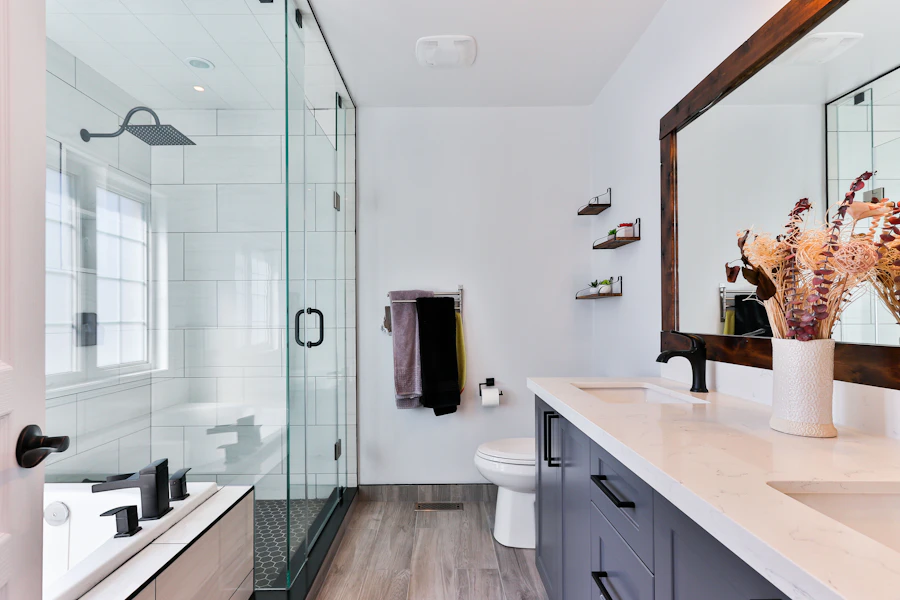
Porcelain tile remains the gold standard for entryways, mudrooms, and bathrooms in mountain homes because it is essentially immune to moisture damage. Fired at extremely high temperatures, porcelain has a very low porosity rating, meaning it won't absorb the meltwater tracked in by boots, skis, or wet dogs. Ceramic tile performs similarly, though it's slightly more porous and best reserved for less punishing zones.
The one real drawback is thermal: tile is naturally cold underfoot, which can feel unpleasant during a mountain winter unless it's installed over a radiant heating system — a pairing so common in alpine architecture that many builders treat it as standard practice rather than an upgrade.

06Cork — The Underrated Insulator
Cork flooring rarely makes the shortlist, but it deserves more attention in cold, damp mountain settings than it typically gets. Harvested from the bark of cork oak trees, it has a naturally cellular structure that traps air, giving it excellent thermal insulation and a soft, warm feel underfoot even without radiant heating beneath it.
Cork also has natural resistance to mold and mildew when properly sealed, and it compresses slightly under pressure, which makes it comfortable for kitchens and living spaces where people stand for long periods. It's not a fit for high-moisture entryways or bathrooms, but for a den, home office, or secondary bedroom in a mountain property, it's a genuinely strong — and often overlooked — choice.
07Polished Concrete and Natural Stone — Built to Outlast the House
For mountain homes built on a slab foundation, polished concrete is sometimes the most logical answer of all: it is the subfloor, sealed and finished as the final surface. This eliminates the moisture-transfer risk entirely, since there's no separate flooring layer for dampness to get trapped beneath. Sealed concrete is also an excellent conductor for radiant heat and virtually maintenance-free for decades.
Natural stone — slate, flagstone, and granite in particular — offers similar durability with a more rustic, lodge-style aesthetic that suits many mountain architectural styles. Both materials share the same caveat as tile: they run cold unless heated from below, and a quality sealant is non-negotiable to prevent staining and moisture penetration at the grout lines.
08What to Avoid in Cold, Damp Mountain Homes
- Solid hardwood in below-grade or high-humidity rooms. It moves too much with seasonal humidity swings and is prone to cupping and gapping.
- Standard laminate flooring near entryways or bathrooms. Most laminate cores are wood-fiber based and swell permanently once water reaches the seams.
- Wall-to-wall carpet in ground-floor or basement rooms. Carpet backing traps moisture and can develop mold invisibly, especially over a slab that never fully cures.
- Unsealed natural stone. Porous stone left unsealed will absorb moisture and stain, and in freeze-thaw climates, trapped water can crack the material outright.
09Side-by-Side Comparison
| Material | Moisture Resistance | Warmth Underfoot | Best Rooms |
|---|---|---|---|
| Engineered Hardwood | Good | High | Living rooms, bedrooms |
| Luxury Vinyl Plank | Excellent | Medium | Mudrooms, basements, kitchens |
| Porcelain Tile | Excellent | Low* | Entryways, bathrooms |
| Cork | Moderate | High | Dens, offices, secondary bedrooms |
| Polished Concrete / Stone | Excellent | Low* | Slab-built living areas, mudrooms |
*Warms significantly with radiant in-floor heating.
10Installation Details That Prevent Future Damage
Material choice is only half the equation — installation method determines whether even the right flooring survives its first mountain winter. A continuous vapor barrier between the subfloor and the finished floor is essential in any home with a crawlspace or slab foundation, regardless of which material is chosen. For wood-based products, acclimating the flooring to the home's indoor humidity for several days before installation prevents the boards from expanding after they're already fixed in place.
Expansion gaps around the perimeter of the room should be slightly larger than a manufacturer's minimum specification in high-swing mountain climates, giving the material room to move without buckling. Finally, subfloor insulation — not just floor-surface insulation — plays a major role in keeping moisture from condensing at the point where warm indoor air meets a cold slab or crawlspace, which is often the true source of "flooring" problems that actually start below the floor entirely.
If you're building new or doing a major renovation, install a radiant heat layer beneath tile, stone or concrete before the finish flooring goes down. It solves the "cold floor" complaint permanently and actively helps drive residual moisture out of the slab over each heating cycle.
11Frequently Asked Questions
Is vinyl plank flooring good for a mountain cabin basement?
Yes. Rigid-core or SPC luxury vinyl plank is one of the few flooring types that performs reliably in below-grade mountain spaces, since it's fully waterproof and doesn't rely on adhesives that can fail in damp conditions.
Can I install hardwood flooring over a heated mountain slab?
Only engineered hardwood rated for radiant heat compatibility should go over a heated slab — solid hardwood is too prone to movement and should be avoided in this application.
What flooring feels warmest in a cold mountain climate?
Cork and engineered hardwood feel warmest without added heating. Tile, stone and concrete feel cold unless paired with radiant in-floor heat, after which they become some of the most comfortable options available.
Does carpet work anywhere in a mountain home?
Carpet can work in upper-floor bedrooms away from moisture sources, but it should generally be avoided on ground floors, basements, or anywhere near entryways where dampness is a persistent risk.
12Final Takeaway
There is no single "best" flooring for a cold, damp mountain home — there's a best flooring for each room, based on how much moisture and temperature swing that specific space will absorb. Waterproof luxury vinyl and sealed tile earn their place in entryways and basements; engineered hardwood and cork bring warmth to living spaces where moisture exposure is lower; and polished concrete or stone, especially paired with radiant heating, offers a nearly maintenance-free foundation for the whole home. Matching the material to the microclimate of each room — rather than choosing one flooring for the entire house — is what separates a mountain floor that lasts twenty years from one that needs replacing after five.
